Saturday, August 7, 2010

BOLAJI'S SHORT STORIES


Book: The Guillotine (2001)
Author: O Bolaji
Reviewer: Pule Lebuso


The Guillotine is the title of the 2001 collection of short stories written by Bolaji. There are ten stories in all in the book, and they are all short stories, ranging from 4 to ten pages. These stories were written between 1996 and 2000, and at least half of them had been published in various newspapers and magazines.

The Drunkard, one of the short stories, is a powerful, didactic, piece of fiction; it contains the usual humour and interesting 'scenes" one has come to expect from Bolaji. The character of Malome in particular, a famous charlatan is brilliantly done. Here is the voluble township wiseacre, full of himself "I'm a psychologist, psychiatrist, psychoanalyst “ he says absurdly, with self-importance.

After reading this story, we are left in no doubt that excessive drinking is not only irresponsible, but dangerous. We are filled with disgust when we read: "The next thing he (Elias) remembered was waking up somewhere in the township, far from his own place, and feeling extraordinarily uncomfortable - in the discarded chassis of a car. He hated himself, seeing some blood stains on his clothes and body, feeling a horrible wound on his face, drenched in his own urine and vomit; hating his own goddamn awful body smell"


(The Guillotine, page 39)

Love Hurts, one of Bolaji's most popular writings (originally published in Drum magazine over a decade ago) is also reproduced in this collection, in book form. A new generation of readers can enjoy this short story that enhances Bolaji's reputation as "African master of the unexpected"


Although interesting enough, The shocker is rather mediocre but deals with the well-worn theme of disappointment in love. The Blabbermouth is a simple enough story too. The language seems quite harsh in the opening paragraphs with the author obviously angry and disgusted with exceeding dishonesty. The conclusion of the story is full of bathos, though.

Two short stories in this collection deal with the supernatural: The Dream, and The Ghost. Both have the usual Bolaji "twist"; The Dream is an interesting story weaved around the Italian phrase "delle bestie con le belle voci". In The Ghost we are introduced to a delightful lady who is too good to be true:

"He felt that there was something 'different' about her, the unearthly glow of her skin...the ethereal whiteness of her teeth: even her voice was so melodious that it defied description...like sweet, congenial rhythmic bells ringing harmoniously"

(Page 44)

Many men young and old, have commented that they found the story The Narrow Escape the most interesting and the funniest. It certainly is an enjoyable story as a young man who cannot stop himself from "seducing" a sexy young lady apparently finds himself in serious trouble

Another Little Drink has a twist of its own too, and one cannot but wonder at the folly of the young man involved here. We are also reminded of the Sarafina 2 play.

The Blackmailer, another popular story of the author's is reproduced in this book too; and in this version some other paragraphs have been added. This is Bolaji doing what he does best: quickly building up a tale, which ends in a completely unexpected manner. It turns out that nobody in this story is what he/she first appears to be.

Now for the very short story, The Guillotine. It is food for some thought. It can be viewed as pathos, bathos, or even idiosyncracy of the highest order. I have heard some readers even claiming that it "symbolises" the sacrificial nature of the author himself, with the protagonist being something of a martyr. This impression is accentuated because the author writes the story in the first person.

In The Guillotine the patent unfairness of the fate and plight of the narrator has to be viewed against the backdrop of his obvious emotional "immaturity" and idealism as he willingly opts for death:

I said: "Sir I want to die too". I moved into the tumbril and a great gasp and shout went through the town. The man in charge said: "Why do you want to die?" I explained that my heart had been broken by a lady. And I heard a horrible peal of laughter, a gargantuan tidal wave of derisive laughter...And the crowd began to chant: "He must die! He must die! the naive man must die...the sentimental guy must die first!!!"

(Page 29)

We should however note that The Guillotine is pure fiction and we do not need to read much into it. The protagonist passionately demonstrates the type of suspect, ultra idealistic love exemplified by Doctor Kawa in Lenrie Peter's novel, The Second Round. It is also interesting that at least once (in a personal poem) Bolaji confesses that he himself "has always been a stickler for romantic love" The short stories in the book, The Guillotine are indeed "mouth watering"

Wednesday, July 21, 2010

FASCINATING LITERARY GALLERY ATTRACTS TOURISTS

FASCINATING LITERARY GALLERY ATTRACTS TOURISTS

By Flaxman Qoopane


Tourists attended in large numbers the Qoopane Literary Gallery exhibited at Tsa Setso Arts and Craft 2010 Soccer World Cup South Africa, held at the Mangaung Information Centre in Bloemfontein from 10 June- 11 July 2010

Tsa Setso Arts and Craft 2010 soccer World Cup South Africa was presented by the Department of Sports, Arts and Culture and Recreation in the Free State province and is supported by the Department of Arts and Culture Republic of South Africa

Flaxman Qoopane is the curator of the Qoopane Literary Gallery who exhibited one hundred photos of South African, Nigerian, Zimbabwean, and Malawian writers and their profiles. He has also added new exciting writers like Hector Kunene and Skietreker Seape to the Gallery.

James Agori, journalist of This day Nigeria, together with Jones Bamidele from News Agency of Nigeria (NAN) and John Ebhota from The Nation newspaper in Nigeria visited the exhibition. “It is one of the best sources of literature in Africa that researchers can benefit a lot from it” said James Agori

Kgomotso Sekhabi, from the Department of Arts and Culture in Pretoria said: “A wonderful initiative that will really need to be supported as it promotes South African writers that have made a tremendous contribution to the literature of South Africa. Keep up the wonderful work, Mr Qoopane”

Jorge Arellana Lavanderos from Chile said: “This is a good development in preserving literature. It will be good for Chilean writers. South African writers can exchange experiences and do cultural exchanges in their works,”

Ing Milin Kamuscak from Bratislava, said: “This is the greatest collection of African writers I’m seeing for the first time in my life, I learnt a lot about literature in Mandela’s country birth”

“I am very excited that the Department of Sports, Arts and Culture and Recreation has given me an opportunity to showcase my gallery during the 2010 soccer World Cup. So far, my exhibition attracted tourists from Chile, Italy, Korea, Nigeria etc and we exchanged contact. I urge other tourists to visit Mangaung information centre” said Qoopane

Mangaung – Bloemfontein
South Africa
Cell: 073 565 7783
Email: qoopaneliterary@yahoo.com


BREAKDOWN OF 70 OF THE WRITERS FEATURED IN QOOPANE’S AWESOME GALLERY

1. WOLE SOYINKA
2. FLAXMAN QOOPANE
3. PULE LECHESA
4. KDP MAPHALLA
5. LETSHASE NAKELI
6. JIM MOKOENA
7. ANDRE BRINK
8. PROF LEWIS NKOSI
9. NADINE GORDIMER
10. PETER ABRAHAMS
11. LAURETTA NGCOBO
12. PROF PITIKA NTULI
13. DR. GOMOLEMO MOKAE
14. SABATA MPHO MOKAE
15. ERIC MIYENI
16. K.SELLO DUIKER
17. FRED KHUMALO
18. KAREL SCHOEMAN
19. PROF KEORAPETSE KGOSITSILE
20. LEBOGANG MASHILE
21. NAPO MASHEANE
22. NTSIKI MAZWAI
23. MPUTLANE OA BOFELO
24. NAPE’A MOTANA
25. LETLAPA MPHAHLELE
26. PROF MBULELO MZAMANE
27. DON MATTERA
28. KGAFELA OA MAGOGODI
29. FRED BILA
30. LESEGO RAMPOLOKENG
31. GCINA MHLOPHE
32. CHINUA ACHEBE
33. DAMBUDZO MARECHERA
34. SIPHO SIPAMLA
35. CHRIS VAN WYK
36. JESSICA MBANGENI
37. K.E. SELEBANO
38. DBZ NTULI
39. SUZAN SEFATSA
40. WINSTON MOHAPI
41. INGOAPELE MADINGOANE
42. MATSEMELA MANAKE
43. LEFIFI TLADI
44. SANDILE DIKENI
45. SINDIWE MAGONA
46. OMOSEYE BOLAJI
47. PROF ESKIA MPHAHLELE
48. BESSIE HEAD
49. JAMES MATTHEWS
50. MIRRIAM TLADI
51. MONGANE SEROTE
52. DR. ZAKES MDA
53. ANTJIE KROG
54. JACK MAPANJE
55. KEN SARO WIWA
56. ELLEN KHUZWAYO
57. PHASWANE MPE
58. TOEK BLIGNANT
59. JOHN MATSHIKIZA
60. TODD MATSHIKIZA
61. CAN THEMBA
62. NAT NAKASA
63. MYESHA JENKINS
64. MAKAAMOLE MANAKA
65. KOLE OMOTOSO
66. CREDO MUTWA
67. ZOLANI MKIVA
68. MATHEWS PHOSA
69. DR. J.J. MOILOA
70. MARIETA VAN ASWEGEN

Friday, July 16, 2010

YOUNG BLOOD

Book review: Young Blood
July 15, 2010

By Tshepo Tshabalala

Young Blood

By Sifiso Mzobe (Kwela Books, R175)


Mazobe's work is inspirational. He is prone to a few jagged transitions, but the story is something the South African movie industry should take thorough note of.

It tells the story of Sipho, 17, who lives in Umlazi, Durban. After doing dismally at school, he drops out to help his father fix cars at home.

Soon his shrewd friend Musa returns from Joburg after applying his intelligence to shoplifting, which progressed to carjacking, eventually earning him a stint in jail. When local carjackers learn of Sipho's skill behind the wheel and under the bonnet, they want to recruit his services. Musa decides against the idea of Sipho running around with untrustworthy cliques, and hooks him up with a few projects he is overseeing.

Sipho tastes the life of quick money and soon grows a hunger for it. He joins in the 'jacking and dissembling of cars, making easy money. But the game becomes more dangerous, leading to drugs, problems with the cops and a trail of death.


The novel explores the materialism around relationships that pressurises especially the male youth into finding means of making cash to avoid segregation. It is about the sacrifices one is willing to make to fit in, and the conflict of working towards a better life, even in a manner that is destructive. It takes you into the underground world of hijackers, money-lovers and misers. It is a breath of fresh air.

The writing is rough, but clever. The story pulsates with energy that makes it intense and very real. It is a voice that tells about crime and how it speaks to the youth through poverty. The read is a thrilling, action-packed diamond in the rough. -- Tshepo Tshabalala

* Courtesy of TONIGHT

Thursday, July 1, 2010

DEEPEST SPRINGS - utterly satisfying


(Above) NMM Duman

By OMOSEYE BOLAJI

Reading NMM Duman’s Deepest Springs is a veritable excitement, a highlight in the life of an authentic black African who cherishes and relishes good writing, poignant plots and descriptions; brilliant writing in general. In sum, I have no doubt in my mind that this work is one of the most breath-taking and satisfying in the pantheon of African literature.

Indeed, the danger in a case like this is that the reviewer or critic of a superb, imaginative work like Deepest Springs can go overboard with superlatives, praising a work to high heavens. Yet the “critic” must do his/her job in a conscionable manner. Though in the case of Deepest Springs, it is obvious that Duman is a tough critic herself (self-critical) who has taken time to ensure that the final product, her book, is outstanding. As all time great TS Eliot tells us:

“The larger part of the labour of an author in composing his work is critical labour; the labour of sifting, combining, constructing, expunging, correcting, testing: this frightful toil is as much critical as creative”

Yes Deepest Springs bears comparison to the best of African writing – whether it be the novels of Buchi Emecheta or Flora Nwapa or Miriam Tlali or Tsitsi Dangaremgba (the all time greats of female African writing). But it goes beyond this – I have no hesitation whatsoever in comparing this work to English classics like those written and still revered, by the Bronte sisters for example (Charlotte and Emily Bronte)

Indeed the "sexual passion" that runs through Duman’s work echoes and adumbrates the best of English works like Jane Eyre (by Charlotte Bronte) and Wuthering Heights (by Emily Bronte). The fact that, effortlessly author Duman gives her own great story an African background, with excellent Sesotho (African) references; not to talk of Afrikaans is a thing of unbridled joy. And celebration.

Of course in those days – over 200 years ago or so- the Bronte sisters could not write specifically about sex despite the smouldering, powerful emotions in their work. The world has moved on, hence in Deepest Springs there are references to sex, decently couched – whether it be the deflowering of our protagonist Dikeledi; or making love in the bathroom (whilst washing) or in the bush/forest.

African literature has thrown up memorable female characters, including a gallery of women of ill-repute. For example this classical extract from Wole Soyinka’s Season of Anomy:

“We must acknowledge the fact that (women) are the familiar vanguard of the army of change. When the moment arrives a woman like Iriyise becomes for the people a Chantal, a Deborah, torch and standard-bearer, super mistress of universal insurgence. To abandon such a potential weapon in any struggle is to admit to a lack of foresight. Or imagination”

Dikeledi is a fine young lady compounded of the variegated emotions of our world, and who is very much in love with her man, despite vicissitudes. She can also be self-sacrificing and stoical as in the case where she remains philosophical and reticent about the abuse (beating) she had earlier received.

The hypocrisy of certain traditional beliefs is also evident in this work and it is also a mark of an excellent writer (Duman) that she does not take sides (as a woman)directly. A good example is when they refer to Dikeledi as a “slut” just because she allows her aroused lover to sleep with her before the formal wedding. She was a virgin even then, so why should she be condemned?

That Duman is a polished, creative writer can also be seen from the many occasions when she enters “the mind” of male characters with great conviction (although of course the author is a woman). Like in the case when Dikeledi’s lover after making love muses over why he was behaving like a naïve, uncircumcised nerd! Such strokes clearly show that the author is a master of her craft!

I can go on and on, but a reviewer (or a critic) is supposed to open doors as it were, give glimpses into a pertinent work which would encourage others to read such a work and bask in its excellence. I am very happy to recommend this outstanding work to all readers from around the world…

(Omoseye Bolaji is the author of over 20 books. His awards for writing include a Lifetime Achievement Award, the Chancellor’s Medal from the University of the Free State, and an African Chieftaincy title)

Tuesday, June 29, 2010

DEEPEST SPRINGS - a masterpiece by NMM Duman


What a literary tour de force by the author, NMM Duman!!!

This is a story of love during the apartheid years. Follow the riveting story of the protagonist, Dikeledi...

395 pages!!!

Publisher: Ad Print (2010)

ISBN 978 - 0 - 620 - 46876 - 3

A majestic work by a superb, imaginative African (black) writer. Fluent, incisive, brilliant prose. A pearl of a work showcasing the best in authentic African literature.

Read NMM Duman's Deepest Springs now!!!


MORE ON NMM DUMAN

By writer Flaxman Qoopane


NMM Duman is the Whole School Evaluation Supervisor, at the Quality Assurance Directorate in the Free State Department of Education in Bloemfontein (South Africa).

She started to write her novel in September 1996. It took her thirteen years to finish the novel in September 2009. She says: “The book originally had 800 pages. When I wanted to publish it, I was told that it was too thick and we decided to publish it to 395 pages.”

The initial South African edition of the novel was launched at the Bloemfontein Public Library in Bloemfontein on 18 June 2010. The cover was designed by Mmamuso Manyo. Duman is the mother of three daughters: Loondo, Xoliswa, and Baraka.

She says her love for creative writing showed itself from a tender age. “I was fortunate to be introduced to reading early in my life. At that time I was 9 years old at Roma in Lesotho. I was attending a class, we had no grades. Every morning we had English workbook. Later we did some kind of literary exercises. I started writing my own stories including the Golden Idol, a story about Tyrannasaurus Rex, invading our school. I made a booklet with pictures.”

She continued: “When I was 12 years old, I wrote more stories; adventure stories, about espionage and love stories. I went to the National University of Lesotho to Study B.Sc, and I studied Masters in Science Education at the University of Southampton in Britain. I stopped writing because I was busy with my studies,” she vouchsafes.

Her parents are retired Professor Mbuyiselo Edward, and Tlhaku Victoria Makhanya. They live at Yellow-wood in Durban. Her father was a Professor in Geography and he lectured at several Universities including Fort Hare, University of Botswana, Lesotho and Swaziland in Manzini, Swaziland and at the National University of Lesotho. Duman’s mother trained as a professional nurse and also as a social worker.

In 1997 Duman joined the Free State Department of Education. “I was employed as the Education Specialist in ABET until 2001. I got promotion to Deputy – Chief Education Specialist until 2009.” Thereafter, she got a transfer to the Quality Assurance Directorate in Department of Education in the Free State, where she is employed as the Whole School Evaluation Supervisor until to date.

Duman was born at Phola Park Benoni, East Rand on 08 December 1965. She is the eldest child; in a family of four children, her sister Mathabo Makhanya – Angura is a medical doctor, and she lives in Roodeport. Her other sister Thembi Makhanya, who was also a Medical Doctor, died in November 2008 in Johannesburg. Her brother, Tshepo Makhanya is an IT Specialist in Durban.

Sunday, June 20, 2010

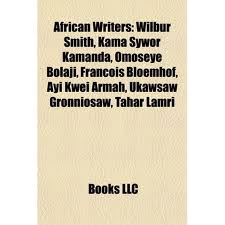
AFRICAN WRITERS


(Above) The USA published book, "African Writers"

Lovers of African literature will always appreciate general books on African writing, documenting our continent's creativity over the years.

Celebrated books along the line include Jane Wilkinson's Talking with African writers; and Indaba with African Writers (by Stephen Gray)

It is thus exciting to learn about a new book on African writing (2010) just released into the international market. I am particularly enthused that a fellow Algerian, Tahar Lamri, is included/profiled in this new book.

But there are other well known, or fairly well known African writers also profiled in this new book (even on the cover) - like Wilbur Smith, Ayi Kwei Armah, O Bolaji, Bloemhof...

Those interested in ordering this new international book can check out the links below:

LINKS

http://isbn.nu/1156385040

http://www.amazon.com/African-Writers-Fran%C3%A7ois-Bloemhof-Gronniosaw/dp/1156385040

http://www.abebooks.com/servlet/SearchResults?isbn=1156385040&cm_ven=PFX&cm_cat=affiliates&cm_pla=links&cm_ite=k120442&afn_sr=gan&pfxid=a_411389498

- B Madjer

Wednesday, June 2, 2010

MAXWELL PERKINS KANEMANYANGA'S SECOND BOOK


Book: How do I talk about my Ordeal?
Author: Maxwell Perkins Kanemanyanga
Publisher: Eselby Jnr Publications


Review by Paul Lothane


This work, How Do I talk about my Ordeal? follows on the heels of the author’s first book, Enemy of the State (2009). This new book reinforces the literary fecundity of the author, Maxwell Perkins Kanemanyanga.

Kanemanyanga has the penchant to produce works that are somewhat didactic, with moralistic undertones. It is no surprise that this continues in this new work, starting with the Introduction. This gratuitous, sometimes irritating approach can be seen from when Gogo spouts the following to a nurse in the very first story:

“But gogo tell me, what is wrong with our society today?” nurse Sibanda asked gogo maMoyo as they were waiting for the results.

“Uh, it’s not easy. You children of today don’t listen to your elders anymore. You say you went to school and us we know nothing. But look at me; I have seen my grandchildren, something that you are failing to do. You are dying young. Go to the cemeteries you will see what I am talking about. Born 1980, died 2000, born 1981 died 2009, born 1985 died 2010. During our time we learnt how to cook like our mothers but now you, learn to drink like your fathers. The young men are like bulls. They leave babies all over they go. The first born is in Bloemfontein, second born in Eastern Cape, the third born in Polokwane all with different mothers. How do you survive this disease? Your children grow up without guidance, because they don’t know their fathers. Every day they are introduced to a different man saying he is your father. A child needs a moral compass. That means instilling a sense of right and wrong. The moral compass for children is their parent’s behaviour. Unfortunately for you children of today, family is no longer important and that is very bad. By the time you will you realize this most of you will be dead.”

An ominous forecast. Yet despite her horrifying ordeal, Maze the young lady violated in the opening story manages to go on with life. As the aphorism points out “As they say the axe that cuts quickly forgets but the tree that was cut will never forget.”

Yet this initial story, like others, goes on and on to the point of becoming tedious. One gets the impression that perhaps this story should have been further developed into something like a novella.

Once again, fine expressions intermittently come to the fore and are lavished on us; the display of eclectic knowledge and references still predominate; eg “She remembered one of the best statements from William Shakespeare’s books and tears began to flow on her pretty face. “The liquid drops of tears that you have shed shall come again, transformed to orient pearl advantaging their loan with interest of ten times double again of happiness.” And the likes of Martin Luther King Jnr are quoted with relish too.

We have what comes close to true pathos in the story “Beautiful Ghost” as a woman is abused and humiliated by her husband. “One night she heard her husband arguing with another woman in the next room. What else could she do anymore? Was it because she was dying? But she had always been there for him. In the dawn of that same night Janet passed away in the arms of her mother whilst, her husband was sleeping in the arms of another woman. She died with a heavy painful heart.” This is heart-rending.

Yet the story is a disjointed one that can easily confuse, with the didactic fulminations once again overdone, and the authorial intrusions sometimes jarring. The author wants to make a point here, and certainly does so.

The story, “Baby from the plastic” might have been a success, but once again it is marred by the author’s penchant to go on and on -even including a long discourse on football, Arsene Wenger and his regime at Arsenal. It is clear the author loves football. But here in this context it comes across as gratuitous, over-stretched and even boring.

But by and large, this is an impressive work by Maxwell Kanemanyanga; his commitment to his art, his principles (even if overdone to the extent of marring his artistic level), and his love for general knowledge have to be commended.

Kanemanyanga has started his literary career by publishing two books of short stories. Many in the literary fraternity will now reckon that his next step should be a novel or at least a novella. In these days where when imaginative writing is thin on the ground at grassroots level, one can not but wish Mr. Kanemanyanga all the best.