Sunday, June 20, 2010

AFRICAN WRITERS


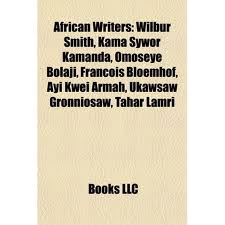
(Above) The USA published book, "African Writers"

Lovers of African literature will always appreciate general books on African writing, documenting our continent's creativity over the years.

Celebrated books along the line include Jane Wilkinson's Talking with African writers; and Indaba with African Writers (by Stephen Gray)

It is thus exciting to learn about a new book on African writing (2010) just released into the international market. I am particularly enthused that a fellow Algerian, Tahar Lamri, is included/profiled in this new book.

But there are other well known, or fairly well known African writers also profiled in this new book (even on the cover) - like Wilbur Smith, Ayi Kwei Armah, O Bolaji, Bloemhof...

Those interested in ordering this new international book can check out the links below:

LINKS

http://isbn.nu/1156385040

http://www.amazon.com/African-Writers-Fran%C3%A7ois-Bloemhof-Gronniosaw/dp/1156385040

http://www.abebooks.com/servlet/SearchResults?isbn=1156385040&cm_ven=PFX&cm_cat=affiliates&cm_pla=links&cm_ite=k120442&afn_sr=gan&pfxid=a_411389498

- B Madjer

Wednesday, June 2, 2010

MAXWELL PERKINS KANEMANYANGA'S SECOND BOOK


Book: How do I talk about my Ordeal?
Author: Maxwell Perkins Kanemanyanga
Publisher: Eselby Jnr Publications


Review by Paul Lothane


This work, How Do I talk about my Ordeal? follows on the heels of the author’s first book, Enemy of the State (2009). This new book reinforces the literary fecundity of the author, Maxwell Perkins Kanemanyanga.

Kanemanyanga has the penchant to produce works that are somewhat didactic, with moralistic undertones. It is no surprise that this continues in this new work, starting with the Introduction. This gratuitous, sometimes irritating approach can be seen from when Gogo spouts the following to a nurse in the very first story:

“But gogo tell me, what is wrong with our society today?” nurse Sibanda asked gogo maMoyo as they were waiting for the results.

“Uh, it’s not easy. You children of today don’t listen to your elders anymore. You say you went to school and us we know nothing. But look at me; I have seen my grandchildren, something that you are failing to do. You are dying young. Go to the cemeteries you will see what I am talking about. Born 1980, died 2000, born 1981 died 2009, born 1985 died 2010. During our time we learnt how to cook like our mothers but now you, learn to drink like your fathers. The young men are like bulls. They leave babies all over they go. The first born is in Bloemfontein, second born in Eastern Cape, the third born in Polokwane all with different mothers. How do you survive this disease? Your children grow up without guidance, because they don’t know their fathers. Every day they are introduced to a different man saying he is your father. A child needs a moral compass. That means instilling a sense of right and wrong. The moral compass for children is their parent’s behaviour. Unfortunately for you children of today, family is no longer important and that is very bad. By the time you will you realize this most of you will be dead.”

An ominous forecast. Yet despite her horrifying ordeal, Maze the young lady violated in the opening story manages to go on with life. As the aphorism points out “As they say the axe that cuts quickly forgets but the tree that was cut will never forget.”

Yet this initial story, like others, goes on and on to the point of becoming tedious. One gets the impression that perhaps this story should have been further developed into something like a novella.

Once again, fine expressions intermittently come to the fore and are lavished on us; the display of eclectic knowledge and references still predominate; eg “She remembered one of the best statements from William Shakespeare’s books and tears began to flow on her pretty face. “The liquid drops of tears that you have shed shall come again, transformed to orient pearl advantaging their loan with interest of ten times double again of happiness.” And the likes of Martin Luther King Jnr are quoted with relish too.

We have what comes close to true pathos in the story “Beautiful Ghost” as a woman is abused and humiliated by her husband. “One night she heard her husband arguing with another woman in the next room. What else could she do anymore? Was it because she was dying? But she had always been there for him. In the dawn of that same night Janet passed away in the arms of her mother whilst, her husband was sleeping in the arms of another woman. She died with a heavy painful heart.” This is heart-rending.

Yet the story is a disjointed one that can easily confuse, with the didactic fulminations once again overdone, and the authorial intrusions sometimes jarring. The author wants to make a point here, and certainly does so.

The story, “Baby from the plastic” might have been a success, but once again it is marred by the author’s penchant to go on and on -even including a long discourse on football, Arsene Wenger and his regime at Arsenal. It is clear the author loves football. But here in this context it comes across as gratuitous, over-stretched and even boring.

But by and large, this is an impressive work by Maxwell Kanemanyanga; his commitment to his art, his principles (even if overdone to the extent of marring his artistic level), and his love for general knowledge have to be commended.

Kanemanyanga has started his literary career by publishing two books of short stories. Many in the literary fraternity will now reckon that his next step should be a novel or at least a novella. In these days where when imaginative writing is thin on the ground at grassroots level, one can not but wish Mr. Kanemanyanga all the best.

Monday, May 24, 2010

Zulu Author dies

Muntu Xulu part of warp and weft of Zulu Literature


Muntu Jeremiah Xulu, novelist, playwright, former teacher, journalist and editor died after a long illness at his home in Vukazenzele, Mangaung in Bloemfontein on the 05th May 2010.

Bekumthetho S.Nkosi from Bhekuzulu in Kwa-Zulu Natal told Free State News “Muntu was my relative, he was an outstanding novelist, playwright and comedian. He published many novels, plays and a book of jokes in his own Zulu Language which was widely read at schools and universities in the country. Xulu had the gift of the pen.”

Jeremiah published the following novels in Zulu, Kunje Ke! published by Shutter and Shutter Publishers in 1987, Amalutha Emalutheni published by Educum Publishers in 2000, Amathe Nolimi published by Shutter and Shutter in 1997, Uthando Lunjeke published by N.G Kerk Printing Press in 1978, Nondela Mtanami Nondela published by Longman Publishers in 1988 and Mahlayana Mahlayana published by Shutter and Shutter publishers in 1981. As a result of his contribution to the Zulu literature, the national Museum in Bloemfontein honoured him as part of their literary exhibition.

Nhlanhlanhle L.Xulu from New Castle in Kwa-Zulu Natal said “My father studies journalism at Kitwe School of Journalism in Zambia in 1957 – 1958. He did another journalism course with the International correspondence School of Journalism in London, Britain in 1964 – 1969,”

He was born on 28 November 1930 in Johannesburg. He grew up in Kwa-Zulu Natal. In 1950 he completed his Teachers Training diploma at Umphumulo Institution.

He was buried at the South Park Cemetery in Mangaung on 15 May 2010.

- F Qoopane

Sunday, May 9, 2010

Kopano Matlwa holds head high


By Aderinsola Ajao


The third edition of the biennial Wole Soyinka Prize for Literature in Africa took place on Friday, April 30 at The Civic Centre in Lagos, Nigeria.

Of over 300 entries, a panel of judges selected from across the continent had the task of pruning the list down to a longlist if 11 and eventually to a shortlist of three. The final three up for the grand prize of $20,000 were South African writer Kopano Matlwa (Coconut), Adaobi Tricia Nwaubani (I Do Not Come To You By Chance) and Wale Okediran (Tenants of The House).

Before the winner was declared, The Crown Troupe of Africa led by Segun Adefila held the curious audience's attention with a series of performances.

The three finalists also received tokens from the organisers to make up for any one of them eventually losing out. Nobel laureate Wole Soyinka, who was also at the event, had pointed out that hopefully, this year the winner will not be a Nigerian woman as had been the case with the two previous editions. Okediran was the single male and second Nigerian writer on this edition's shortlist and Soyinka had hoped he would not win.

At the end of the evening, one winner was declared plus one more. Possibly to break from Soyinka's observation, Matlwa of South Africa and Okediran, former president of the Association of Nigerian Authors (ANA) were declared joint winners of the third Wole Soyinka Prize for literature.

This came as a surprise to many in the hall, who already thought there would be one clear winner.Previous winners include female Nigerian writers Sefi Atta (Everything Good Will Come) and Nnedi Okorafor-Mbachu (Zahrah the Windseeker).

Organised by The Lumina Foundation, the award was established in 2006 to "encourage people to read, to think and to write," said its chairperson, Francesca Emanuel. Since its inception, known and unknown writers from across the continent have vied for the top prize of $20,000. For the first edition, 87 entries were received from four African countries; by the next edition 126 works were submitted from 6 African countries. This year's edition received 330 entries from 11 participating countries.

Friday, April 16, 2010

DENIS BRUTUS IS NO MORE...


Demise of a great wordsmith

It was with great sadness that I personally learnt about the death of Prof Dennis Vincent Brutus, an academic, political activist and world class poet.

In 1988 when I was in exile at the ANC School, the Solomon Mahlangu Freedom College (SOMAFCO) in Morogoro Tanzania, I established the poetry link with Prof Brutus who then lectured in the Department of Black community, Education, Research and Development at the University of Pittsburgh, Pennsylvania in the USA.

He personally sent me a number of interesting poetry magazines (The Gar) relevant to his poetry and the struggle to South Africa, which together with the SOMAFCO poets we used (the material) during our poetry workshop.

Prof Dennis Brutus also sent some us some of his anthologies of poems including Letters to Martha and other poems from a South African prison, A simple lust and Censure published in Enugu, Nigeria.

I recall that on behalf of the Somafco Poets I sent our poems to Prof Brutus and he edited and published them in magazines (CALLALO) and newspapers including the People (UWAP) at the University of Pittsburgh.

In 1989 a Senegalese lecturer Pierrette Herzberger- Fofana from the University of Erlangen in West Germany requested me to make a contribution to a book Critical Perspectives on African Literature in honour of Dennis Brutus’s 65th birthday in 1989.

Poets and writers across the board are deeply saddened by his death. Brutus left a polished mark in the national and international poetry.
- F Qoopane

Sunday, April 11, 2010

SUGAR MAN AND DELIGHTS OF WHITE WOMEN


(above) Oyono's Houseboy

It must be confessed that it was something of a relief to learn that Aryan Kaganof, Supremo of the movie, Sugar Man had a symbolic message whilst depicting black men as "impotent" whilst faced with the powerful attractions of white prostitutes in his movie.

Indeed the erotic scenes dished out by the white ladies in this movie are very mouth-watering. The women go out of their way to try to galvanise the black clients into action, but they largely fail. This aspect will certainly not go down well with most black viewers, unaware of the "message" from Kaganof, who depicts them in this wise.

The history of African Black writing for decades has shown the black African's fascination with white women. Many memorable works of fiction published by African authors have emphasized this over the years. Ayi Kwei Armah's Fragments is just one of such works (Aimee is the white lady in the book). In Kole Omotosho's The Edifice, a white English lady, Daisy, is the object of interest.

Perhaps the most powrful, tentative description in this wise occurs in Ferdinand Oyono's Houseboy where the young protagonist almost goes crazy after a mere handshake with a white woman:

"I have held the hand of my queen. I felt that I was really alive. From now on my hand is sacred...my hand belongs to my queen whose hair is the colour of ebony...whose skin is pink and white as ivory. A shudder ran through my body at the touch of her tiny moist hand...my life was mingling with hers at the touch of her hand. Her smile is as refreshing as a spring of water. Her look is as warm as a ray from the setting sun"
(from Oyono's Houseboy)

Apparently, virility is taken for granted by black African writers and there is hardly any hint of impotence in the continent's literary works, save occasionally where the man in question is elderly. (In Sugar Man the 'disabled' blacks are young hunks!). The only African work that comes to mind as regards impotence is Sembene Ousmane's Xala, though of course both the man and the young lady in question are blacks.

Here's a thought: What if Aryan Kaganof (considers) turning the movie Sugar Man into a novel? This would better explain (if possible) the motivations and plight of the characters in the movie; though I still believe the author would be hard-pressed to explain the shortcomings of the black characters, no matter how peripheral they might be in the movie. Meanwhile Black African literature blog salutes the earth-shattering performances of Leigh Graves, Deja Bernhardt and Co!!!
- R Khotseng

Sunday, April 4, 2010

Odia garners Fonlon-Nichols Award

Nigerian poet, essayist, journalist, and social critic, Odia Ofeimun emerged the 2010 winner of the Fonlon-Nichols Award. The award, administered by the African Literature Association, ALA, is given to an African writer every year for excellence in creative writing and for contributions to the struggle for human rights and freedom of expression, according to Dr. Oty Agbajoh-Laoye, chair of the ALA awards committee.

Mr. Ofeimun is the author of eight collections of poems and numerous essays on political analysis and cultural criticism. His most recent volumes include Go Tell the Generals, A Boiling Caracas and Other Poems, and I Will Ask Questions With Stones If They Take My Voice, and Lagos of the Poets, a poetry anthology. In 2008, Los Ninõs del Estero, a selection of his poems, was published in a Spanish translation in Mexico.

Ofeimun was born on March 16, 1950. He published his first book of poems, the critically acclaimed The Poet Lied, at the age of 25. His career began as a journalist and literary correspondent with The Midwest Echo, a newspaper based in Benin, capital of present-day Edo State, in Nigeria. He has also had experiences as a factory worker, civil servant, and union organizer. After a stint as a graduate student of Political Science at the University of Ibadan, he was appointed as the private secretary to Nigeria's leading political figure and former presidential candidate, Chief Obafemi Awolowo, in 1978. Following the fall of the Second Republic, Ofeimun published A Handle for the Flutist, his second poetry collection. He also became a member of the editorial board of The Guardian (Lagos).

From 1989, he was a British Council fellow at Oxford University in England; he lived in London and worked with Nigerian expatriates in the pro-democratic New Nigeria Forum until 1993 when he returned to Nigeria in the wake of the controversial June 12 presidential elections of that year. From this point, Ofeimun's political and literary engagements followed two distinct but interconnected paths: he became the president of the Association of Nigerian Authors (ANA), and the lead columnist for the hitherto-clandestine TheNEWS/TEMPO publications. His tenure as president of the writers' body (of which he had been publicity secretary and general secretary between 1982 and 1988) coincided with the political crisis of the 1990s, and it has to be borne in mind that his immediate predecessor was the late writer and environmental activist, Ken Saro-Wiwa.

The annulment of the presidential elections precipitated the "stepping-aside" of General Ibrahim Babangida, Nigeria military president (1985-1993), and the rise to power of General Sani Abacha, under whose tenure the country experienced untold political and economic repressions. Progressive political opposition to the military dictatorship coalesced around the groups National Democratic Coalition (NADECO), the Campaign for Democracy (CD), and the Democratic Alternative (DA). Although his political connections were strongest with the first, Ofeimun dedicated his weekly columns in TheNEWS to championing and appraising the activities of all the three groups. Those classic pieces, including such titles as "The June Twelvers' Dilemma", "The Ngbati Press", "On Whose Side are the Orisa?", are remarkable for their robust illumination of modern Nigerian (and indeed, African) political and cultural history, and for their thoughtful eloquence as a most accomplished example of the concern of African writers for the lives of the majority in their societies. Ofeimun's tenure as ANA president ended in 1997, but his relationship with TheNEWS/TEMPO continued for a little longer, peaking with the organization's second period of "guerrilla journalism" (1995-1998).

In April 1995, while attempting to travel to England for a conference sponsored by the New Nigeria Forum, Odia Ofeimun was stopped by security agents at the airport in Lagos. Although they never succeeded in jailing him, the agents questioned him on his political and other activities, and his travel documents were confiscated. For the next three years he was unable to travel outside of Nigeria, and would not regain his passport until the period of "liberalization" which followed the death of General Abacha in June 1998.

In spite of these involvements, Ofeimun found time for creative writing. His career as a poet suffered undeniably from the crisis in the publishing industry, like that of many African-based writers in the 1980s and 1990s. In 2000, he published three volumes of poems: A Feast of Return Under African Skies, Dreams at Work and Other Poems, and London Letter and Other Poems. Ofeimun's poems have been widely anthologized. His works-in-progress include the poetry anthology "Twentieth Century Nigerian Poetry", the essay collections "Africa's Many Mansions" and "In Search of Ogun", and a long-awaited political biography of Obafemi Awolowo. Since Nigeria's return to civil rule, Ofeimun has become a highly-respected and much-sought-after opinion leader and public speaker, giving speeches to NGOs and other civil society outfits. He is a leading champion of human rights and anti-corruption crusades in Nigeria, and he remains steadfastly independent of political organizations in the country.

The Fonlon-Nichols award was established in 1992 to honor Bernard Fonlon and Lee Nichols for their own contributions to both African literature and freedom of expression. Past winners include Rene Philombe, Werewere Liking, Ken Saro-Wiwa, Nuruddin Farah, Nawal el Saadawi, Niyi Osundare, Assia Djebar, Abdullatif Laabi, Wole Soyinka, Pius Nganda Nkashama, and Tess Onwueme. This year the award was publicly presented at the 36th annual conference of the African Literature Association March 10 - 14, 2010 held in the University of Arizona, Tucson.